Saturday, 14 May 2011

East Anglia 2011

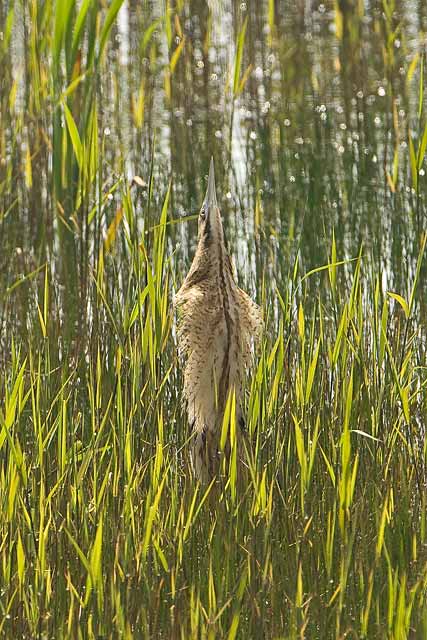
Our annual pilgrimage to the east of England started at 04:30 on friday 6th may When i was picked up by fellow photographer Tim Taylor. Minsmere was our first port of call & we duly arrived around 09:30. A Red kite was spotted near Reading on the way & the other party in the other car also had a Rose-ringed Parakeet near Heathrow. We had been told about a month previous that a Bittern was showing well in front of the island mere hide. No luck there, so we moved to the Bittern hide. Marsh harriers were very much in view most of the time we were there, but did not come very close. We did however strike lucky with a Bittern right in front of the hide! Now, did we get the hides wrong, I dont believe so. I think it was just our day. This particular bird was very obliging for a Bittern, occasionally coming out into full view. We witnessed it catching Sticklebacks & small invertebrates & on several occasions catching large dragonflies, even plucking them from the air. The rest of the day was abit of an anti-climax after that, so we moved on to North Norfolk. There was a few hours of daylight left so we decided to go "huntin wabbits". Choseley barns is a great area for hares & migrants. A pair of Yellow wagtails afforded close views, Yellowhammers called all around & a couple of Corn buntings were seen. There was very little spilt grain in the barns area so was relitivley devoid of the usual flocks of seed eaters.
Hares though were in most of the surrounding fields along with Partridges & Pheasant.
The following day started at again in the barns area, where we struck lucky with a pair of Grey partridge (only the second time i have seen them in England, though i have seen plenty in Scotland).
Then after breakfast, on to Titchwell & the brand new Parrinder hide. Now this really is a hide that you want to visit. Large fully opening windows, separate stools (some bolted down, others moveable) & mud banks just 25m away. Avocet, Redshank, Ruff, Ringed plover, Little-ringed plover, Dunlin, Little & Temminks stint, Grey plover & Common sandpiper were all present. A visit to the beach produced both Common Scoter & Eider. The afternoon was spent at Cley where we managed to find & photograph a party of 5 Shore lark on the shingle bank at the end of the east bank (a lifer for me). On the way back a pair of Greenshank on a small pool & 3 Whinchat allowed some record shots.
 Back to Cley on sunday morning to try & connect with a Citrine Wagtail on the West bank. This we & the dozen or so others present  failed at, but a Sedge warbler at spitting distance kept us entertained. A drive nearer the beach produced a pair of summer plumaged Bar-tailed Godwits on a small splash. These were more than happy to totally ignore us as we snapped away. Then back to Titchwell for a hour to mop up before moving on to Weeting Heath. A Stone curlew was seen in flight briefly, but as usual, miles away. A walk around the woodland walk failed to produce Tree pipit & Woodlark although they had been seen there earlier in the day.
The other 4 on the trip were just birding & managed a respectable total around 125 species for the weekend.


Photos below in no particular order:

Summer plumaged Bar-tailed Godwit at Cley 


Bittern from Bittern hide, Minsmere. 


Greylag, Island mere hide, Minsmere  

Grey Partridge, Choseley area. 


 Brown hare, Choseley area.
The usual pose.......... 
 Thats better, getting used to me.......
 Then totally ignoring me!
 But sometimes they just pop out right in front of you.

Little-ringed plover, Parrinder hide, Titchwell 


 Record shot of Little Stint & Dunlin, Parrinder hide, Titchwell.

Dozing Red-legged Partridge, Choseley area. 

 
Redshank, Titchwell.


Redshank, Minsmere 

Shorelark, Cley, East bank. 


Ruff, Parrinder hide, Titchwell. 

Sedge Warbler, West bank, Cley. 

Yellow wagtail, Choseley barns.


Greenshank, Cley, East bank.

Water rail (& Bittern!), Minsmere, Bittern hide.

Garden warbler, Titchwell

Monday, 25 April 2011

Meare Heath waders

The second lagoon from the Ashcott corner car park is traditionally pumped down at this time of year in order to make it more attractive to passage waders. The exposed mud & shallow open water has already attracted Little ringed plover, Ruff, Common sandpiper, Redshank & Black tailed Godwit. Wood and Green sandpiper also drop in, but not so this spring yet.
Early last week a Wood sand was reported on the sos message board as being present. Birders wishing to add this species to there year list visited & the bird was subsequently correctly identified as a Lesser yellowlegs. A breeder in N America, it is a fairly regular vagrant to europe with 5-10 records annually in the UK & Ireland.
I have made 2 visits in the past week. The first resulted in very poor, long distance (150m +) record shots with the 600mm & 1.7x converter.
 This afternoon i returned & a very helpful Sparrowhawk, flushed the congregation of Godwits & Redshank, along with the yellowlegs to a much nearer point on the lagoon.
Below is a shot of one of the Black-tailed Godwits as it flew from its roost to the feeding area on the lagoon.
Two of the three Common Sandpipers present on my first visit.
Meare heath is a part of Natural Englands Shapwick heath NNR in the Avalon Marshes, Somerset.

Wednesday, 6 April 2011

Bad blogger..........

I know, i know, its been a while! The truth is, i have had very little worth putting on this blog for a couple of months. Its not that i haven't been out, because i have. More very little in the form of subject matter (also if the truth be known, a lack of enthusiasm).
Now the sun has returned (sometimes), i feel a renewed vigour for the natural world.
Migrants have already started pouring to our shores. Wheatear, Ring ouzel, Sand martin to name but a few, have been seen in the area for at least a couple of weeks.
This morning, to my delight, i spotted a very contrasty looking small bird in the back garden. Grabbing my bins from the spare room, I confirmed my suspicions & nailed the male Pied flycatcher, flitting from branches after its insect prey.
 Panic then set in as i raced back to the spare room to grab the camera, already fitted with the 600mm lens. A couple of bankers were taken quickly through the glass. I then inched open the window & managed to grab about 20 shots before it moved to another tree & was lost from sight.
Whilst driving across Tealham moor, on the look out for the reported Yellow wagtail (not seen), I flushed a Wheatear from the roadside verge. This is my first this year & i normally see quite a few over the spring & autumn period. It posed quite nicely on a roadside gate post, allowing a slow approach & a handheld shoot through the open passenger window.

A little earlier this year, also on Tealham, was this Short-eared owl. Up to 3 birds were using the same area & were seen most days during the late afternoon. This particular afternoon, it only approached as close as 100m. This shot has had a lot of post processing & is a fairly large crop of the original. Necessary to get a usable image. The watery winter sunshine & the backlit subject add something to an otherwise standard record shot. It goes to show how an uninspiring image can become something better with a little thought & a bit of computer work.
I recently visited a private nature reserve on Cary moor. The reason for visiting this delightful reserve was to try & photograph the Tree sparrows that have regularly been coming to seed, put down by Bruce Taylor.
Around 6 were present on my visit, but far greater numbers have been seen over the winter. Birders in the county will appreciate that Tree sparrows are scarce in Somerset. A site on the Mendips being the previous best place to see them. Now at Cary moor, you have the luxury of a carpeted hide only meters from the feeding birds. Also present were numerous Reed buntings, Chaffinches & a single Yellowhammer. A shallow pond lies on the opposite side of the hide & attracts waterfowl.
Anyone wishing to visit, should first get in contact with Bruce by email on brucetaylor@hotmail.com to get directions, parking instructions & the code to the lock on the hide.

Please remember that this is a private reserve & we can visit due to the kindness of the landowners. Providing we all conduct ourselves in a proper manner & follow Bruces instructions, we will be able to see Tree sparrows for years to come.
More later..........I promise!

Tuesday, 21 December 2010

Winter wonders

Since my last post, I have been out a few times without a shot being taken. Other trips bagged only a couple mediocre record shots. Then there was the times when the light was just nice & the wildlife was behaving.


These Waxwings are part of the "eruption" we in Britain have been experiencing this winter. Due to harsh weather or failure of the berry crop in their native Scandinavia, they move south in great numbers, searching out berries, Rowan being a particular favourite.
These birds (a flock of up too 22 birds) was frequenting the grounds of the college in Minehead. These images were taken late in the day, just before sunset & needed a lot of processing to get them to a reasonable standard.
A drive one afternoon caught this roadside Buzzard in the watery winter sunlight. They usually scarper at the first sign of a human.
I was pleased to see a Barn owl hunting in one of their favourite haunts local to me. This was taken a couple of days ago at 2 in the afternoon, a sign that the bird is struggling to find enough to eat during the recent snow. On a lighter note though, the snow on the ground lights the underside of the bird nicely. A 2/3 stop over exposure was required to counteract the snows effect on the cameras meter.
A couple of hours at Shapwick heath on the levels, produced this fly-by Bittern. Again the snow on the ground has reflected the light back onto the underside of the bird. To prevent a silhouette, +2/3rds stop exposure compensation was needed.

To end, I would just like to wish you all a Merry Christmas & a Happy new year. Please come back soon in 2011!

Wednesday, 20 October 2010

Sika here, Sika there.....

An early start this morning & a 11/2 hour drive found me at the RSPB reserve at Arne in Dorset. The reason for going? The rutt of the Sika deer (Cervus nippon). Sika deer were introduced to the UK from Asia during the mid 19th century. Initially confined to parks, individuals managed to escape over the years so that there are now established populations within the British countryside. Often confused with fallow deer, this species possesses a much richer coat spotted with white during the summer months.
Parking on the side of the road beside the car park (they dont get up as early as me in Dorset, the gates were locked!), I soon heard the unearthly whistling (more squealing) call of the Sika stag. If you have never heard this noise, then you could be forgiven for thinking that someone is being murdered!
Following the squeals along a path, i soon found the first deer, a hind, then further along, a few more. Then the first stag of the day.
It ended up that you could not walk around the reserve without litterally bumping into deer. They are everywhere. At one junction in the track i stopped to check my route map, when a young stag decided to check me out. He was only a few meters away when i turned around & saw him. I froze, he ran.


 And to finish with an opportunistic Dartford warbler..........